Storm Damage on Your Roof? What Washington Homeowners Should Do Next
By Curtis Thompson, DHT Construction & Roofing · Published · Updated
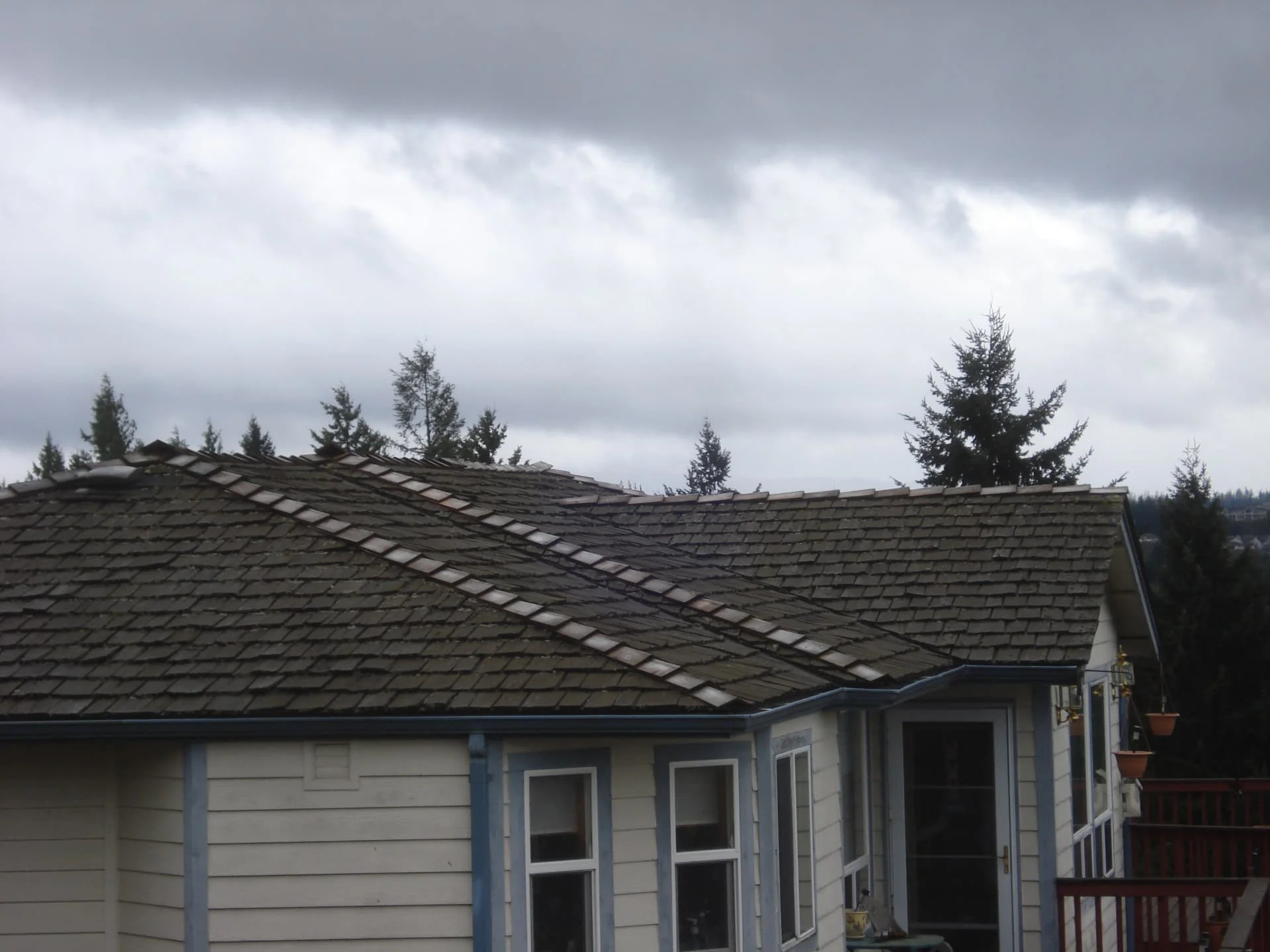
When a Pacific Northwest windstorm rolls through Tacoma, the first sign of roof trouble is often shingles in the yard, a branch on the roof, or a new drip from the ceiling. It is stressful, and it is easy to do things in the wrong order.
This guide walks through what Washington homeowners should do next: how to stay safe, how to document the damage, how temporary tarping works, how to work with your insurance company, and how a roofer like DHT Construction & Roofing fits in.
What should I do first after a storm damages my roof?
Safety comes first. Do not climb onto a wet, windy or damaged roof. Wet shingles are slippery, damaged decking can give way, and storms often bring down power lines near the house.
Walk around the outside of your home from the ground. Look for missing or lifted shingles, bent flashing, fallen limbs, and gutters pulled away from the fascia. Inside, check ceilings and the attic, if it is safe to enter, for water stains, dripping or wet insulation.
If water is coming in, move furniture and electronics away from it and put down buckets or towels. If water is near light fixtures or outlets, turn off power to that area and stay clear.
How do I document roof damage for insurance?
Good records make every later step easier. Before anything is cleaned up or repaired, take clear photos and short videos.
What photos should I take?
Photograph the whole house from each side, then get closer shots of anything that looks damaged: missing shingles, debris on the roof, dented gutters and downspouts, and broken vents. Inside, photograph ceiling stains, wet drywall and any belongings that got wet.
Phones add a date and time to each photo automatically, which helps show when the damage appeared. Keep everything in one album so you can share it easily.
Should I keep the shingles that blew off?
It can help. Set aside a few pieces of shingle, flashing or vent that came off the roof. They show the type of material on your home and the kind of damage it took.
Should I tarp my roof after storm damage?
In our wet climate, a small opening can let in a lot of water over a few days, especially when storms come back-to-back. A temporary tarp keeps rain out until a permanent repair can be done.
A proper emergency tarp is heavy-duty material secured with battens so the wind cannot get underneath it — not a loose tarp held down with bricks. DHT Construction & Roofing can tarp the damaged area to keep rain out and come back for a permanent repair.
Keep receipts and photos of any temporary repairs. Many policies expect homeowners to take reasonable steps to prevent further damage, but what is reimbursed depends on your specific policy.
When should I call my insurance company?
Contact your insurer soon after the storm. Many policies have deadlines for reporting damage, and an early call gets an adjuster on the schedule sooner, which matters after a big storm when many homes are affected.
Have your policy number, the date of the storm and your photos ready. Ask what your deductible is, whether your policy covers wind damage, and what documentation they need from you.
Every policy is different. Whether a claim is covered, and how much is paid, depends on your policy's terms, your deductible and the insurer's decision. A roofer cannot promise coverage — only your insurance company can decide that.
What does an insurance adjuster look for on a roof?
In general terms, an adjuster is trying to answer two questions: what was damaged, and was it caused by the storm or by age and wear?
They typically look at missing, creased or lifted shingles, damage to flashing, vents and gutters, impacts from fallen limbs, and water damage inside the home. They also note the overall age and condition of the roof, because older wear is usually treated differently from sudden storm damage.
Having a roofer's documentation ready helps the conversation stay focused on facts.
See your roof price in 60 seconds
How can a roofer help with a storm damage claim?
A roofer who works on storm damage regularly can see things that are hard to spot from the ground. At DHT Construction & Roofing, we document the damage, meet with your adjuster on-site, write the scope, and rebuild your roof to current code. Most homeowners only pay their deductible, though that always depends on what the insurer approves.
Our free inspection includes photo documentation, so you have a clear record of what we found on the roof. If the damage turns out to be minor, we will tell you that too.
Will storm damage mean a full roof replacement?
Not always. Many storms only lift or tear off a section of shingles, which can be repaired with matching materials. Widespread damage, or damage on a roof that was already near the end of its life, can make replacement the better choice.
If you are unsure, our guide on roof repair versus replacement walks through how Tacoma homeowners can decide, and our cost guide shows typical replacement price ranges.

How can I prepare my roof for the next storm?
The best time to find weak spots is before winter. A fall inspection can catch loose shingles, worn flashing, moss and clogged gutters before Pacific Northwest windstorms and atmospheric-river rain arrive.
Keeping gutters clear, trimming branches that hang over the roof, and fixing small problems early all reduce the chance of a big repair later.
Frequently asked questions
Does homeowners insurance cover storm damage to a roof in Washington?
It depends on your policy. Many policies cover sudden wind damage, but coverage, deductibles and what is paid are decided by your insurance company under your policy's terms.
Should I call a roofer or my insurance company first?
Make sure everyone is safe, document the damage, and contact your insurer. A roofer can inspect, photograph the damage and tarp it to prevent more water getting in, and DHT can meet your adjuster on-site.
Can DHT tarp my roof after a storm?
Yes. DHT Construction & Roofing can tarp the damaged area to keep rain out and come back for a permanent repair. Call (253) 363-1948.
Does DHT help with insurance claims?
Yes. We document the damage, meet with your adjuster on-site, write the scope, and rebuild your roof to current code. Most homeowners only pay their deductible.
Get your roof price in 60 seconds
Type your address, we measure your roof by satellite, and you book a free inspection.